Mostrando las entradas con la etiqueta intronano o2012 146489. Mostrar todas las entradas

viernes, 30 de noviembre de 2012

Breakthrough Nanoparticle Halts Multiple Sclerosis


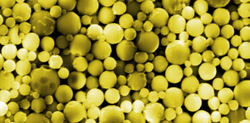
Northwestern Medicine researchers developed a biodegradable nanoparticle (shown here) that regulates the immune system in mice with multiple sclerosis.
In a breakthrough for nanotechnology and multiple sclerosis, a biodegradable nanoparticle turns out to be the perfect vehicle to stealthily deliver an antigen that tricks the immune system into stopping its attack on myelin and halt a model of relapsing remitting multiple sclerosis (MS) in mice, according to new Northwestern Medicine research.
The new nanotechnology also can be applied to a variety of immune-mediated diseases including, Type 1 diabetes, food allergies, and airway allergies such as asthma. 
In MS, the immune system attacks the myelin membrane that insulates nerves cells in the brain, spinal cord, and optic nerve. When the insulation is destroyed, electrical signals can’t be effectively conducted, resulting in symptoms that range from mild limb numbness to paralysis or blindness. About 80 percent of MS patients are diagnosed with the relapsing remitting form of the disease.

Noticia completa: http://www.feinberg.northwestern.edu/news/2012/11/nanoparticle.html

Nanocrystals Detect Internal Damages of Composite Materials


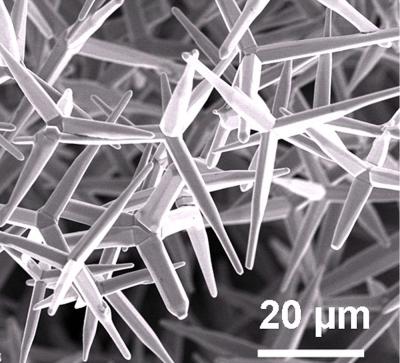
Picture of zinc oxide tetrapods taken by scanning electron microscope (Copyright 2012, Wiley)


"The luminescent features of zinc oxide tetrapod crystals are well established. According to our work hypothesis, these characteristics showed pronounced variations under a mechanical load, and we realised that it could help to detect internal damages of composite materials", says Dr. Yogendra Mishra of Kiel University's Technical Faculty. In one experiment, the scientists added zinc oxide tetrapod shaped crystals to a silicone (polydimethylsiloxane) polymer and tested its general properties. They found that the resulting composite material is on the one hand stronger than silicon and on the other hand emits light in different colors when exposed to UV light. When the material is subjected to mechanical stress, the intensities of the emitted lights changes.


Fuente: http://www.azonano.com/news.aspx?newsID=26077