domingo, 22 de abril de 2012

IBM demonstrates graphene devices for terahertz waves


Graphene has been courted as the miracle material of the future, since different formulations have been fabricated into conductors, semiconductors and insulators. Now IBM has added photonic to the list by demonstrating a graphene/insulator superlattice that achieves a terahertz frequency notch filter and a linear polarizer, devices which could be useful in future mid- and far-infrared photonic devices, including detectors, modulators and three-dimensional metamaterials (see paper inNature Nanotechnology: "Tunable infrared plasmonic devices using graphene/insulator stacks"

"In addition to its good electrical properties, graphene also has exceptional optical properties. In particular, it absorbs light from the far-infrared to to the ultra-violet," said IBM Fellow Phaedon Avouris. "The terahertz range was of particular interest to IBM, because these frequencies can penetrate paper, wood and other solid objects for security applications. Unfortunately, today there are very few ways of manipulating terahertz waves such as polarizing and filtering it, but because graphene operates well at terahertz frequencies we have concentrating on creating these types of devices."

Teraherz frequency oscillations can be carried in graphene by plasmons—the collective oscillation of carriers—to enable low-loss tunable filters. But in single-layer graphene, the carrier concentration and resonant frequency was too weak for photonics applications, according to IBM. However, by going to a multi-layer graphene/instulator superlattice, transparent devices can be patterned into photonic-like crystals that distribute the carriers among the layers effectively enhancing both the carrier density and the resonant frequency


More information here

'Super-nano' plastic fibres touted for next-generation IT

Materials scientists in France said on Sunday they had made highly-conductive plastic wires on the nanoscale, an invention with potential for mobile devices, computing and solar energy.

Just a few billionths of a metre across, the fibres are light, inexpensive, flexible and easy to handle, in contrast to carbon nanotubes, the team said in the journal Nature Chemistry.
The wires are derivatives of man-made molecules called triarylamines that have been used for decades in photocopiers.
In their study, the scientists say they were surprised to find that the wires "self-assemble" spontaneously in response to a flash of light, and are nearly as conductive as copper.
In a bench-test experiment, the tiny materials formed a bridge between two electrodes that were spaced 100 nanometres (100 billionths of a metre) apart.
"The researchers now hope to demonstrate that their fibres can be used industrially in miniaturised electronic devices such as flexible screens, solar cells, transistors (and) printed nanocircuits," the National Centre for Scientific Research (CNRS) said in a press release.

Solar panels are seen in Les Mees, southern France in 2011

This picture taken in 2011 in Les Mees, southern France shows solar panels. Materials scientists in France said on Sunday they had made highly-conductive plastic wires on the nanoscale, an invention with potential for mobile devices, computing and solar energy

 more info: here

Quantum dot LEDs get brighter, more efficient

 While quantum dot-based light-emitting diodes (QLEDs) are not made of organic materials, they share many of the same advantages as organic LEDs (OLEDs). For instance, both QLEDs and OLEDs outshine semiconductor-based LEDs in terms of their greater flexibility, better color quality, and potential for lower cost since they can be fabricated using a simple process on a large-area substrate. But ever since the first QLEDs were demonstrated in the mid-'90s, about a decade after OLEDs, their performance has lagged behind OLEDs despite ongoing improvements. Now in a new study, a team of researchers from South Korea has designed and demonstrated QLEDs with an improved efficiency and unprecedented brightness that matches the brightness of today's best fluorescent OLEDs.
The key to improving the brightness and efficiency of the QLEDs is improving the injection of current-carrying electrons and holes into the quantum dots. The more efficiently the electrodes can inject electrons and holes into the quantum dots, the more efficiently the device can emit light. Usually, the anode is made of indium tin oxide, whose transparency allows light to escape. But here, the researchers inverted the device by making the indium tin oxide the cathode with the help of zinc oxide nanoparticles as an electron transport layer, which performed charge carrier injection much more efficiently than before.
“The most important cause of the low performance of QLEDs is the poor injection of holes into the quantum dots (QDs) from the anode and neighboring hole transport layer due to a huge potential energy barrier,” Changhee Lee told Phys.org. “Because of that, the electron-hole balance is not achieved, resulting in low quantum efficiency and low maximum brightness. Furthermore, the excess electrons or holes, which do not recombine in the QD layer and enter the neighboring organic hole-transport orelectron-transport layers (HTL or ETL), can cause leakage current and device degradation, resulting in poor efficiency and stability. Therefore, good carrier injection is a key factor for realizing high-performance QLEDs.”


Polysaccharide-Coated Thermosets For Orthopaedic Applications: From Material Characterization To In Vivo Tests


The development of tissue engineering and regenerative medicine techniques has introduced the new concept of “bioactive” biomaterial, able to induce specific biological responses by engaging interactions with the surrounding living tissue at  the molecular level.In particular, for applications in orthopaedics and dentistry the ideal biomaterial surface should be able to induce osteogenesis and ensure a stable biological/chemical bond between implant and bone.

Various materials are clinically used for orthopaedic implants, in particular titanium, CoCrMo and  stainless steel alloys. In spite of their good biocompatibility, such metallic materials have some drawbacks, mostly related to high stiffness, possible wear of surface oxide and lack of bioactivity.  Alternative materials are being sought to overcome such limitations.

The long term stability and success of orthopaedic implants depend on the osseointegration process  which is strongly influenced by the biomaterial surface. A promising approach to enhance implant  integration involves the modification of the surface of the implant by means of polymers which mimic the natural components of the extracellular matrix,  e.g. polysaccharides. In this study methacrylate thermosets (bisphenol A glycidylmethacrylate/triethyleneglycol dimethacrylate), a widely used composition for orthopaedic and dental applications, have been coated by electrostatic deposition of a bioactive chitosan-derivative. This polysaccharide was shown to induce osteoblasts aggregation in vitro, to stimulate cell proliferation and to enhance alkaline phosphatase activity. 
The coating deposition was studied by analyzing the effect of pH and ionic strength on the grafting of the polysaccharide. Contact angle studies show that the functionalized material displays a higher hydrophilic character owing to the increase of surface polar groups. The mechanical properties of the coating were evaluated by nanoindentation studies which point to higher values of indentation 
hardness and modulus (E) of the polysaccharide surface layer, while the influence of cyclic stress on the construct was assessed by fatigue tests. Finally, in vivo tests in minipigs showed that the polysaccharide-based implant showed a good biocompatibility and an ability for osseointegration at least similar to that of the titanium Ti6Al4V alloy with roughened surface.  


Polysaccharide-Coated Thermosets for Orthopaedic Applications: from Material 
Characterization to In Vivo Tests 
Andrea Travan*, Eleonora Marsich*, Ivan Donati*, Marie-Pierre Foulc, Niko Moritz,
Hannu T. Aro, Sergio Paoletti* 
*Department of Life Sciences, University of Trieste, Via Giorgieri 1, Trieste I-34127, Italy 
Rescoll, Société de Recherche, 8 Allée Geoffroy Saint-Hilaire, 33615 Pessac, France 
Orthopaedic Research Unit, Department of Orthopaedic Surgery and Traumatology,               
University of Turku, Kiinamyllynkatu 10, 20520, Turku, Finland


Find more information here.


Buckyball to a longer life

Can eating Buckyball-infused Olive Oil prolong your lifespan?
By Itza Montforte Noguez, Web Writer

It's already known that buckyballs could have great potential in fields such as drug delivery, medical tracers, cancer fighter, etc, but the toxicity was always a concern. Beeing so, a group of French researchers set out to study its toxicity and other effects and came up with a twist, not only are buckyballs safe but a buckyball diet double the lifespan of lab rats.
Since it's a limited study, many scientists have concluded that it's a result of a calorie-restricted diet but it still reaises questions about the potencial health benefits of buckyballs.

In this study, researchers put some buckyballs in olive oil and fed it to a group rats while control rat groups were given water and plain olive oil. The control rats' median lifespan was 22 to 26 months while buckyball rats reached 42 months. The buckyball was absorbed by the animals'  blood stream and eliminated from their bodies within 10 hours but it apparently worked as a potent antioxidant.

On the other hand, computer simulations and other studies have shown buckyballs are soluble in fat and can cross cell membranes, which is one reason why they could be usefull as drug carriers but could aldo make them toxic. Small doses of fullerenes are more toxic than large doses.

To read more about this article please visit:
http://www.popsci.com/science/article/2012-04/can-eating-buckyball-infused-olive-oil-prolong-your-lifespan

Golden solution to greenhouse emitions

Hybrid copper-gold nanoparticle convert carbon dioxide, may reduce greenhouse emissions
By Itza Montforte Noguez, Web writer

Copper was already known to reduce carblon dioxide since it can be converted into an electrode and stimulated with voltage so that the carbon dioxide is reduce to methane or methanol. This process requires relatibly low energy and produces fuel that might be used by the industries that produce carbon dioxide in first place.
This would be the perfet solution exept that copper is unstable thus easily oxidating metal slowing the reation with carbon dioxide and producing unwanted byproducts such as carbon monoxide and formic acid.

To ease this problem, researchers at MIT have come up with a solution that also reduces the energy needed for copper to reduce carbon dioxide. They mixed the stable properties of gold with copper forming hybrid nanoparticles of gold and copper that can resist corrosion and oxidation and use less energy to react with carbon dioxide.
nanoparticles
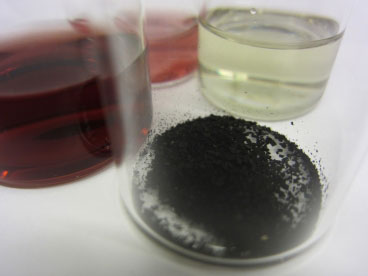
Researchers have combined gold nanoparticles (in light red) with copper nanoparticles (in light green) to form hybrid nanoparticles (dark red), which they turned into powder (foreground) to catalyze carbon dioxide reduction.

The team chose to engineer partivle at the nanoscale in order to increase the surface area available for the interaction with carbon dioxide molecules.

To read more about this article by the MIT and know how this particles are made please visit:
http://www.nanowerk.com/news/newsid=24876.php?utm_source=feedburner&utm_medium=twitter&utm_campaign=Feed%3A+nanowerk%2FagWB+%28Nanowerk+Nanotechnology+News%29


Diamond's Quantum computer

Quantum computer built inside a diamond
By Itza Montforte Noguez, web writer
Peter Macdiarmid / Getty Images
A team of scientists from de USC, along with other scientists, have built the first quantum computer with protection against "decoherence" (noise that prevents the computer from functioning correctly) and it has been built in a diamond.
This demostration included two quantum bits called qubits, made of subatomic particles alongside with the demostration of the viability of solid-state quantum computers as they can be easily scaled up in size. Typical quantum computers where made uo from gas and liquid state systems.

As for the qubits, que qubits can encode one and zero at the same time, unlike the bits that can either encode a one or a zero. This behaviour will allow quantum computers to perform optimization calculations much faster than traditional computers.

About the diamond, the scientists used the impurities on the diamond as qubits  and microwave pulses to continually switch the direction of the electron spin rotation, proving that their diamond-encases system does operate in a quantum fashin by seeing how closely it matched "Groover's algorithm".

To read more about this article please visit:
http://www.extremetech.com/extreme/125221-scientists-create-quantum-computer-in-a-diamond?utm_source=rss
http://techland.time.com/2012/04/10/meet-the-quantum-computer-inside-a-diamond-does-it-run-forever/
http://www.eurekalert.org/pub_releases/2012-04/uosc-qcb040412.php


"Nano-ears" for viruses and bacterias

Ultra-tiny "nano-ear" can hear bacteria and viruses
By Itza Montforte Noguez, Web writer

A Tiny piece of gold suspended in a laser beam is the component of the world's smallest ear. It can hear sounds a million times fainter than any human ear can contituting a powerful acoustic microscope.

This is the work of Jochen Friedmann and Andrey Lutich of Munich's Ludwig-Maximilians University which is  a progression from the so-called "optical tweezer" developed in 1986. This optical tweezer uses laser beams to trap microscopic particle inside an electric field suspending the particle so that it no longer moves on its own. The only way to move it is that something nearby disturbs it.
The nano-ear detects that something as vibrations of sound waves that the human ear con't possibly detect. It can hear sonds as low as -60 decibels.
In order to test this nano-ear, a tiny piece of gold was suspended inside the beam and heated other particles arround so the sound vibrations could be detected. The movement of the particle inside the beam revealed not just the exact decibel levels created by the heated particle but the direction they came from.

If the progress of this equipment continious like this, the nano-ear would be hugely useful in bacteria, viruses and other microorganisms as the detection of the sound they make could impove the data on what distinguishes different strains. The nano-ear might be able to detect the presence of this microorganisms in extreme conditions.

To read more about the work of Jochen Friedmann and Andrey Lutich please visit:
http://news.sciencemag.org/sciencenow/2012/01/scientists-create-worlds-tiniest.html
http://io9.com/5876669/ultra+tiny-nano+ear-can-hear-bacteria-and-viruses

sábado, 21 de abril de 2012

Effect of the Novel Low Molecular Weight Hydrolyzed Chicken Sternal Cartilage Extract, BioCell Collagen, on Improving Osteoarthritis-Related Symptoms: A Randomized, Double-Blind, Placebo-Controlled Trial


Osteoarthritis (OA) is a degenerative disease of the joints, which involves progressive deterioration of the articular cartilage.The etiology of OA is unknown. However, obesity, aging, trauma, repetitive strenuous joint activity, and genetics are risk factors associated with the development of the disease. The progression of OA results in disability due to joint pain, stiffness, and swelling in the knees, hips, hands, and spine. The molecular pathogenesis of OA appears to involve complex interactions among multiple pathways leading to the loss of structural components, including collagen type II and glycosaminoglycans (GAGs) such as chondroitin sulfate and hyaluronic acid (HA), and to inflammation and senescence of chondrocytes. Because there is no cure, treatment of OA aims to control progression of disease, to control pain, to improve or maintain range of movement, and ultimately to improve or maintainunction. Pharmaceutical regimens involve analgesics and nonsteroidal anti-inflammatory drugs (NSAIDs) to alleviate pain. However, these interventions provide only partial symptomatic relief and are not believed to affect underlying disease progression. NSAID therapy is also associated with gastrointestinal and cardiovascular complications. Intraarticular injection of HA is practiced by clinicians, but considered costly, its clinical effects often being temporal and its benefits controversial.In an effort to discover active compounds that are safe, efficacious, and cost-effective in managing OA symptoms, some dietary supplements including glucosamine, chondroitin, vitamin D, and polyunsaturated fatty acids have been evaluated in clinical trials. Many of these trials have demonstrated that these supplements might help reduce joint pain and in some cases favorably affect structural changes.
The aim of this randomized, double-blind, placebo-controlled trial was to investigate the tolerability and efficacy of BioCell Collagen (BCC), a low molecular weight dietary supplement consisting of hydrolyzed chicken sternal cartilage extract, in the treatment of OA symptoms. Patients (n = 80) in the study had physician-verified evidence of progressive OA in their hip and/or knee joint. Joint pain had been present for 3 months or longer at enrollment, and pain levels were 4 or higher at baseline as assessed by Physician Global Assessment scores. Subjects were divided into two groups and administered either 2 g of BCC or placebo for 70 days.Intent-to-treat analysis showed that the treatment group, as compared to placebo, had a significant reduction of VAS pain on day 70. The BCC group experienced a significant improvement in physical activities compared to the placebo group on days 35 (p = 0.007) and 70 (p < 0.001). BCC was well tolerated and found to be effective in managing OA-associated symptoms over the study period, thereby improving patient’s activities of daily living. BCC can be considered a potential complement to current OA therapies.


Effect of the Novel Low Molecular Weight Hydrolyzed Chicken Sternal Cartilage Extract, BioCell Collagen, on Improving Osteoarthritis-Related Symptoms: A Randomized, Double-Blind, Placebo-Controlled 
Trial Alexander G. Schauss, Jerome Stenehjem, Joosang Park, John R. Endres, and Amy Clewell
AIBMR Life Sciences, Inc., 4117 South Meridian, Puyallup, Washington 98373, United States
Division of Trauma, Surgical Critical Care & Burns, School of Medicine, University of California at San Diego, 2999 Health Center Drive, San Diego, California 92123, United States


Find more information here.

miércoles, 18 de abril de 2012

Flexible and micro-porous chitosan hydrogel/nano ZnO composite bandages for wound dressing: In vitro & in vivo evaluation


Wound infection is the major difficulty in the field of wound care management because such infections can cause exudate formation, delay the wound healing, facilitate improper collagen deposition etc. Microbes are the major reason for infection and the prevalence of the same is high in around us. The major infection causing bacteria were Staphylococcus aureus (S.aureus) and Escherichia coli (E. coli). Once entered to the body, these microbes grow immediately and start to form colonies. The microbes can easily be entered to the body through the wounds and can reach to deeper portions of the tissue and further can lead to internal infection.
The remedy for above mentioned harms would be the use of wound dressing with
antibacterial activity.Hydrogel based wound dressings would be helpful to provide cooling sensation, moisture environment and act as barrier to microbes. To overcome these hassles, they have developed flexible and micro-porous chitosan hydrogel/nano zinc oxide composite bandage (CZB) by the incorporation zinc oxide nanoparticles (nZnO) into chitosan hydrogel.
Swelling, degradation, blood clotting, antibacterial, cytocompatibility, cell attachment on the material and cell infiltration into the composite bandages were evaluated. The nanocomposite bandage showed enhanced swelling, blood clotting and antibacterial activity. Cytocompatibility of the composite bandage has been analyzed in normal human dermal fibroblast cells. Cell attachment and infiltration studies showed that the cells were found attached on to the nanocomposite bandages and penetrated into the interior. Further, the in vivo evaluations in sprague-dawley rats revealed that, these nanocomposite bandages enhanced the wound healing and helped for faster reepithelialization and collagen deposition. The obtained data strongly encourage the use of these composite bandages for burn wound, chronic wound and diabetic foot ulcers.
Flexible and micro-porous chitosan hydrogel/nano ZnO composite bandages for wound dressing: In vitro & in vivo evaluation
P.T. Sudheesh Kumar, Vinoth Kumar Lakshmanan, T.V. Anilkumar, C. Ramya,
P. Reshmi, A.G. Unnikrishnan, Shantikumar V. Nair, and Jayakumar Rangasamy

Find more information here.

Co-electrospun Nanofibrous Membranes of Collagen and Zein for Wound Healing


In recent years, electrospun polymeric nanofibers have been shown great potential as dressing materials for wound healing.Up to now, various biopolymers and their derivatives have been used widely for this purpose because of their biological origin, nontoxicity, hydrophilicity,
biocompatibility, biodegradability, and low cost.

However, single-component biopolymer solution is often insufficient for good electrospinnability or could not result in good fiber properties. In this work, this team attempt to develop biocompatible electrospun nanofibers for wound healing by coelectrospinning of collagen and zein in aqueous acetic acid solution. Collagen is one of the main proteins in the connective tissues and has been shown to have many advantageous features including biodegradability, weak antigenecity, and superior biocompatibility in medical applications.
It was found that the combination of zein could improve the electrospinnability of collagen. For the resultant electrospun membrane, its fiber diameter, surface wettability, mechanical, and in vitro degradable properties as well as cell adhesive ability could be modulated by the change of
collagen/zein blending ratio. Moreover, berberine drug could be incorporated in situ into the electrospun nanofibrous membrane for its controlled release and antibacterial activity. The addition of berberine showed little effects on the fiber morphology and cell viability. In addition, the wound healing performance of the as-obtained nanofibrous membranes was examined in vivo by using female Sprague−Dawley rats and histological observation.


Co-electrospun Nanofibrous Membranes of Collagen and Zein for Wound Healing
Jiantao Lin, Caihong Li, Yi Zhao, Jianchan Hu, and Li-Ming Zhang
DSAPM Lab and PCFM Lab, Institute of Polymer Science, School of Chemistry and Chemical Engineering, Sun Yat-sen University,
Guangzhou 510275, China
Guangdong Medical College, Dongguan 523808, China

Find more information here.

Eggshell membranes into a high-performance electrode material for supercapacitors


As incredible as it may sound, it seems they found a way to recycle the eggshell from the chicken eggs. It´s natural estructure, made of interconnected carbon fibers makes it a viable capacitor. Not only that, it´s porosity help in the process of conducting a potencial throught this unusual material.

"We found that, due to its unique structure, the systematic conductivity of CESM is one order of magnitude higher than that of activated carbon, which makes it an ideal electrode material for high power density supercapacitors," says Li.
He points out that, with the rapid progress of nanotechnologies, more and more fancy materials are being developed with novel properties and through innovative new techniques.
"Using carbon materials as an example, carbon nanotubes and graphene have much higher intrinsic conductivities than the carbonized eggshell membrane that we fabricated, and they have great potential as electrode materials," says Li. "However, the biggest challenge is how to integrate these materials into an efficient system which carries the advantages of each materials and eliminating their respective disadvantages. I believe that this is one of the areas where we can learn a lot from nature.

To read the full article, go here
Graphene-based nanotechnology in energy applications


Since the search energy has caused the rapid decay on our homeworld, it is only natural that we look for an alternative. The idea is to find a cheap, profitable and non-contaminating energy source. Graphene proves to be a material that could solve our energy based problems. Here are some examples: 


Solar energy


The reviewers point out that graphene has great potential to be used for low-cost, flexible, and highly efficient photovoltaic devices due to its excellent electron-transport properties and extremely high carrier mobility. "Recently, several graphene-based solar cells have been reported, in which graphene serves as different parts of the cell. One of the reasons for the current interest in graphene is the great potential for transparent and conductive electrodes in solar cells. Graphene is an ideal 2D material which can be assembled into film electrodes with good transparency, high conductivity, and low roughness."


Supercapacitors


The authors note that "in contrast to the conventional high-surface-area materials, the effective surface area of graphene materials as capacitor electrodes does not depend on the distribution of pores in a solid state, which is different from the current supercapacitors fabricated with activated carbons and carbon nanotubes...with less agglomeration, should be expected to exhibit a higher effective surface area and thus better supercapacitor performance


For more information, go here

lunes, 16 de abril de 2012

NanoSpider

Spiderbot

The latest installment in DNA nanotechnology has arrived: A molecular nanorobot dubbed a "spider." Click to enlarge this image.
Paul Michelotti


  • A molecular robot made of DNA has been created by scientists.
  • The nanobot walks like a spider and follows a track made out of stitched-together strands of DNA.
  • In a separate study, another research team had enabled a nano-scale "assembly line."

Scientists on Wednesday announced they had created a molecular robot made out of DNA that walks like a spider along a track made out of the chemical code for life.

The achievement, reported in the British journal Nature, is a further step in nanoscale experiments that, one day, may lead to robot armies to clean arteries and fix damaged tissues.

The robot is just four nanometers -- four billionths of a meter -- in diameter.

Milan Stojanovic of New York's Columbia University, who led the venture, likens the nanobot to "a four-legged spider."

The beast moves along a track comprising stitched-together strands of DNA that is essentially a pre-programmed course, in the same way that industrial robo move along an assembly line.

Para saber mas haz click aqui


sábado, 14 de abril de 2012

Nanotechology with dna.. why not?

DNA molecules have been used to build a variety of nanoscale structures and devices over the past 30 years, and potential applications have begun to emerge. But the development of more advanced structures and applications will require a number of issues to be addressed, the most significant of which are the high cost of DNA and the high error rate of self-assembly. Here we examine the technical challenges in the field of structural DNA nanotechnology and outline some of the promising applications that could be developed if these hurdles can be overcome. In particular, we highlight the potential use of DNA nanostructures in molecular and cellular biophysics, as biomimetic systems, in energy transfer and photonics, and in diagnostics and therapeutics for human health.

There is no overwhelming functional imperative for life to be based on DNA or RNA,' says Phil Holliger from the MRC Laboratory of Molecular Biology in Cambridge, UK, who led the team. 'Other polymers can perform these functions, at least at a basic level.' Holliger's team's xeno-nucleic acid (XNA) polymers each replace DNA's ribofuranose sugar ring with six other cyclic structures that can still form helical chains and base pairings. But rather than using relatively inefficient chemical synthesis, the scientists wanted to exploit polymerase and reverse transcriptase enzymes to copy genetic information from DNA templates to XNAs. In living organisms, polymerases can make RNA from nucleotide monomers using existing DNA strands as templates. Reverse transcriptases can then create a copy of the original DNA strand from that RNA in the same way.

fuente:
Publisher: Nature Pub. Group : London Country of Publication: England NLM ID: 101283273 Publication Model: Electronic Cited Medium: Interne


domingo, 8 de abril de 2012

Los retos para México en Nanociencia y Nanotecnología

Por Humberto Terrones (*)

México no está bien ubicado en ciencia a nivel internacional. De acuerdo con índices internacionales la realidad es clara, estamos muy por debajo de los países industrializados y también por debajo de países que están emergiendo como potencias científicas como China. Estos indicadores provienen del trabajo que se realiza en universidades y centros de investigación en todo el mundo, por lo que resulta necesario ubicar a las universidades y centros de investigación mexicanos a nivel internacional. México, país de 110 millones de habitantes, no puede tener ciencia competitiva con una sola universidad entre las primeras cien, la UNAM, y las demás instituciones científicas mexicanas en lugares muy por debajo. El reto de posicionar mejor las universidades del país implica cuando menos quintuplicar la producción científica, contratar más y mejores científicos (abrir muchas más plazas), crear instituciones de investigación de excelencia, invertir no sólo más en ciencia sino también en educación superior y en todo el sistema educativo mexicano. Lo anterior requiere mucho más del tan comentado 1% del Producto Interno Bruto (PIB) para la ciencia.

Con estos antecedentes, pese a lo novedoso de la Nanociencia y Nanotecnología (NyN), la situación de este campo en México no es muy diferente a lo expuesto. México se encuentra en el lugar 24 en publicaciones de NyN con 518 artículos en 2005. En los primeros lugares están Estados Unidos con 14 mil 750 publicaciones, China con 11 mil 746, Japón con 7 mil 971, Alemania con 5 mil 665, Corea del Sur con 4 mil 98, Francia con 3 mil 994, el Reino Unido con 2 mil 786, etc. En el mismo artículo, México no aparece en la lista de países con patentes relacionadas con NyN. Para lograr un número de publicación similar al del Reino Unido (séptimo lugar), México requiere quintuplicar su producción científica y para estar en tercer lugar con Japón requeriría 15 veces en NyN. Todo esto sin considerar otro factor importante, pobremente considerado en el país, la vinculación con la industria, la innovación y la competitividad. Ciertamente, con las prioridades bien enfocadas y los mecanismos adecuados del gobierno, la NyN pueden ayudar a mejorar la competitividad de México a través de innovación, lo cual no se ve por ningún lado, todavía.

La NyN pueden ser un nicho para que se comiencen a dar desarrollos que ayuden a paliar la situación tan penosa de la balanza tecnológica. De lo anterior se desprende otro reto para el país y para el desarrollo de NyN: la articulación entre las universidades y el sector productivo. En los países industrializados se alienta que los investigadores formen empresas de México esto no ocurre, se da de manera que no impacta o definitivamente se desalienta. Hay que recordar que las universidades y los centros de investigación al mismo tiempo tienen que mejorar su lugar en producción científica y tecnológica para demostrar a las empresas que hay posibilidades de éxito. Pocos empresarios, nacionales o internacionales, invertirán recursos en universidades nacionales que se encuentran en los sitios 1000 de la tabla mencionada anteriormente.

Para mejorar la situación de la NyN, la ciencia, la tecnología, la innovación y la vinculación, México no sólo requiere invertir el 1% del PIB en ciencia y seguir la ley: se requieren varias reformas estructurales entre las que están una reforma integral en educación, incluyendo por supuesto la educación superior, y se requiere una reforma en ciencia y tecnología. No hay otra manera de poder enfrentar los retos futuros ni de apoyar el desarrollo del país. De seguir así, no vamos a subir de los lugares 30 en ciencia, pero seguro sí bajará en la tabla y se dejará poco margen de maniobra para que las generaciones futuras salgan adelante.

En lo personal, y teniendo en mente lo mencionado en este artículo, debo comentar que el grupo de investigación en NyN al que pertenecíamos no sólo mi hermano Mauricio y yo, sino estudiantes y técnicos en el IPICYT (centro del Conacyt), de acuerdo a un artículo publicado en la revista internacional Physica Status Solidi B en 2008, estaba ubicado en el lugar número 10 a nivel mundial. Digo estaba, porque ha sido destruido por la misma dirección del IPICYT y del mismo Conacyt.


*Profesor visitante en la Universidad Católica de Lovaina en Bélgica y en el Laboratorio Nacional de Oak Ridge en Estados Unidos · hterrones007@gmail.com


sábado, 7 de abril de 2012

Nanotecnologia y.. esperen que? Petroleo?

One of the radical application of the nanotechnoogy is in the help of a controversial energy font: the oil.
Nanotechnology could be used to enhance the possibilities of developing conventional and stranded gas resources and to improve the drilling process and oil and gas production by making it easier to separate oil and gas in the reservoir. Nanotechnology can make the oil and gas industry considerably greener. There are numerous areas in which nanotechnology can contribute to more-efficient, less-expensive, and more-environmentally sound technologies than those that are readily available. We identified the following possibilities of nanotechnology in the petroleum industry: 1-Nanotechnology-enhanced materials that provide strength to increase performance in drilling, tubular goods, and rotating parts. 2- Designer properties to enhance hydro-phobic to enhance materials for water flooding applications. 3- Nano-particulate wetting carried out using molecular dynamics 4- Lightweight materials that reduce weight requirements on offshore platforms 5- Nano-sensors for improved temperature and pressure ratings 6- New imaging and computational techniques to allow better discovery, sizing, and characterization of reservoirs.

And, b y personal knolowage, the most important useful nanotechology application on this topic is the ecoclean of the oil. Carbon nanotubes, which consist of atom-thick sheets of carbon rolled into cylinders, have captured scientific attention in recent decades because of their high strength, potential high conductivity and light weight. But producing nanotubes in bulk for specialized applications was often limited by difficulties in controlling the growth process as well as dispersing and sorting the produced nanotubes.

ORNL's Bobby Sumpter was part of a multi-institutional research team that set out to grow large clumps of nanotubes by selectively substituting boron atoms into the otherwise pure carbon lattice. Sumpter and Vincent Meunier, now of Rensselaer Polytechnic Institute, conducted simulations on supercomputers, including Jaguar at ORNL's Leadership Computing Facility, to understand how the addition of boron would affect the carbon nanotube structure.
"Any time you put a different atom inside the hexagonal carbon lattice, which is a chicken wire-like network, you disrupt that network because those atoms don't necessarily want to be part of the chicken wire structure," Sumpter said. "Boron has a different number of valence electrons, which results in curvature changes that trigger a different type of growth."
Simulations and lab experiments showed that the addition of boron atoms encouraged the formation of so-called "elbow" junctions that help the nanotubes grow into a 3-D network. The team's results are published in Nature Scientific Reports.
Fuente:
http://www.nanotech-now.com/news.cgi?story_id=45121
Islamic Azad University - Omidieh Branch, Omidieh, Iran